
Foreign Earned Income Exclusion for Yacht Crew Explained
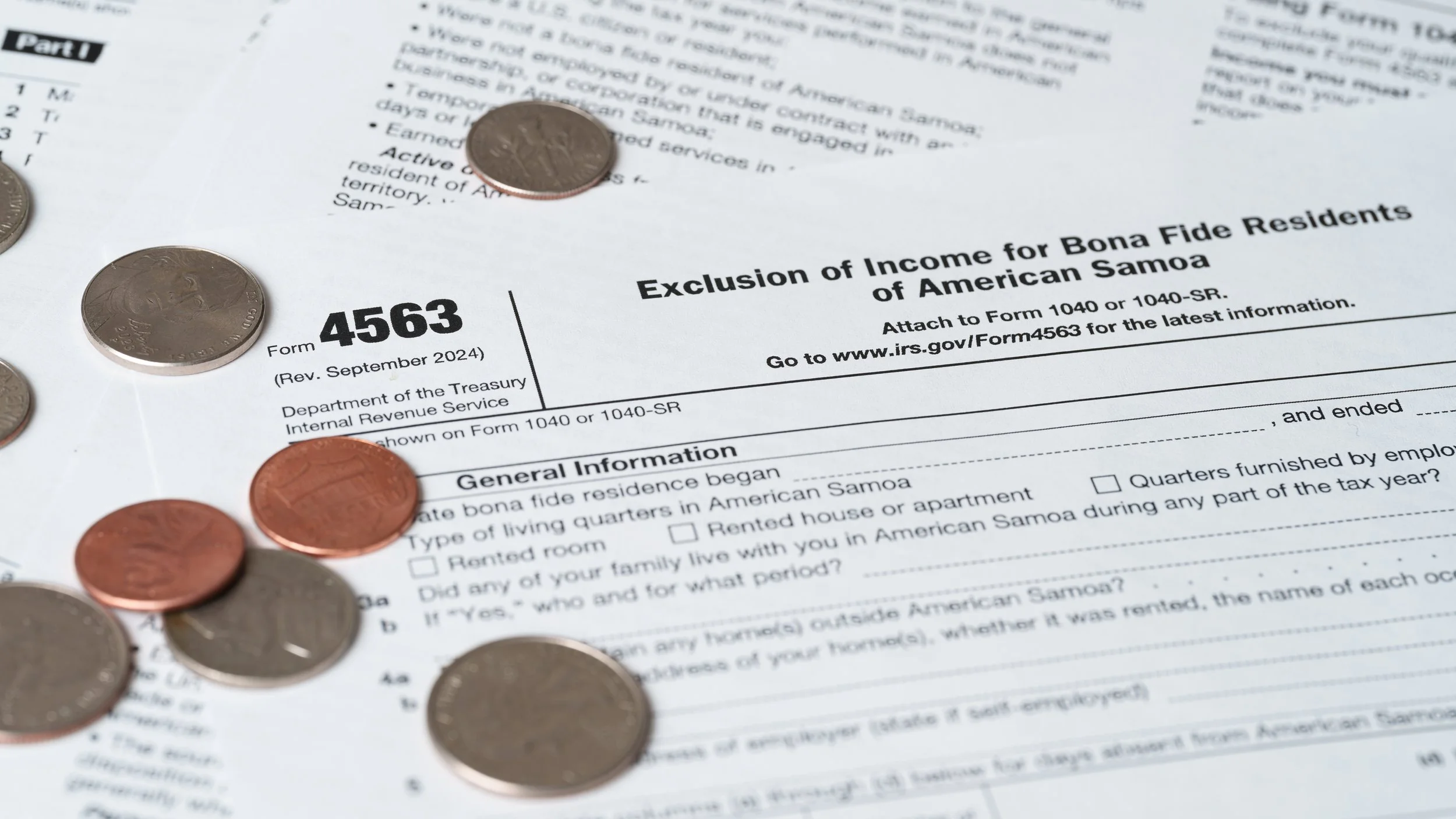
The FEIE can reduce (or eliminate) U.S. income tax on certain foreign earned income — but yacht crew often get tripped up by day counts, tax home, vessel movements, and “what counts as foreign.” This guide breaks it down in plain English.
What the FEIE actually does
The Foreign Earned Income Exclusion (FEIE) can allow qualifying U.S. taxpayers living and working abroad to exclude a portion of foreign earned income from U.S. federal income tax. Yacht crew benefit most when their work pattern and documentation clearly support eligibility.
What FEIE can do
Reduce taxable income, potentially lowering U.S. tax due — especially when your income is earned outside the U.S.
What FEIE can’t do
Fix poor day tracking, unclear tax home, or missing proof. If those are weak, the exclusion is vulnerable.
The two qualifying tests (and how crew typically qualify)
Most yacht crew qualify using one of two paths. The best path depends on your travel pattern and whether you have a stable foreign base.
Path A: Physical Presence Test
- Designed for people who are physically outside the U.S. enough days
- Most common for crew on rotation or moving between ports/countries
- Requires clean day tracking and proof (stamps, flights, itineraries, logs)
Path B: Bona Fide Residence Test
- Typically used when you have a real foreign residence and ongoing ties abroad
- Stronger when you live abroad long-term (lease, utilities, residency permit)
- Can be harder for crew who move constantly without a stable base
Tax home (crew mistake #1)
For yacht crew, the biggest FEIE misunderstanding is assuming “working on a foreign-flagged yacht” automatically qualifies. Eligibility often depends on whether you can support a tax home outside the U.S. and avoid disqualifying ties.
Quick reality check
If most of your “home life” is still U.S.-based (address, banking, driver’s license, time in the U.S.), you need to document your foreign base carefully.
- Where do you actually live between contracts?
- Where are your strongest personal ties?
- Do your documents support that story consistently?
Day count tracking (crew mistake #2)
Crew often “eyeball” days outside the U.S. — and that’s where FEIE falls apart. You want a clean, defensible count with backup.
- Track U.S. entry/exit dates precisely (even partial days matter)
- Keep flight confirmations, stamps, marina/port itineraries, and rotation schedules
- Make sure your timeline matches your passport and any travel records
What counts as “foreign earned” for yacht crew
Not all income is treated the same. Crew are often paid in ways that mix payroll, tips, bonuses, reimbursements, and sometimes U.S. pay systems — so classification matters.
Usually straightforward
Salary or wages for services performed outside the U.S. (when your facts support FEIE and the services are abroad).
Often needs review
Bonuses tied to U.S. work periods, unclear reimbursements, mixed duties, or pay structures that don’t match your travel timeline.
Documents that protect you (audit-resilient proof)
If the IRS ever asks questions, “I was on the boat” is not documentation. Your best defense is a clean, organized record set.
- Passport stamps + flight confirmations (or travel history)
- Employment contract(s) + pay statements
- Rotation schedules, vessel itinerary, or port logs
- Foreign address proof (lease, bills) if using bona fide residence
- FEIE day-count tracker (one source of truth)
Red flags that can create problems
- U.S. visits that push you under required foreign days
- Day-count “gaps” you can’t explain with documentation
- Claiming FEIE while maintaining strong U.S. home ties with no foreign base
- Pay and travel timeline mismatch (income earned “abroad” while you were in the U.S.)
- Mixing multiple vessels and jurisdictions without a single organized record set
FEIE questions yacht crew ask us all the time
Tap a question to expand.
Do I automatically qualify because I work on a yacht?
No. The yacht itself doesn’t grant eligibility. Qualification depends on your day count test and whether your facts support a tax home outside the U.S.
If the yacht is foreign-flagged, is my income “foreign”?
Not automatically. The key issue is often where the services were performed and whether your timeline and documentation support the position taken.
What if I visited the U.S. for a short time?
Short trips can still affect eligibility. That’s why precise entry/exit tracking matters. We typically build a day-count tracker that matches your records.
Can I still claim FEIE if I’m paid through a U.S. payroll?
Possibly, but it needs review. Pay structure, documentation, and where the work was performed all matter.
What’s the #1 thing that makes FEIE “audit-resilient”?
A consistent story supported by hard records: clean day count, proof of location, and documents that match the return.
I’m behind on filing — can FEIE help with catch-up returns?
It can, but catch-up filings need careful sequencing and transcript review. The goal is to file correctly, not quickly.
Want to know if you can claim FEIE safely this year?
The goal isn’t just getting the exclusion — it’s claiming it in a way that matches your travel history, pay structure, and documentation. If your year involved vessel changes, U.S. visits, rotations, or mixed income, a quick review can prevent a painful clean-up later.
Related services: USA Crew Tax Prep • Crew Quarterly Tax Prep • Mental Health Resources