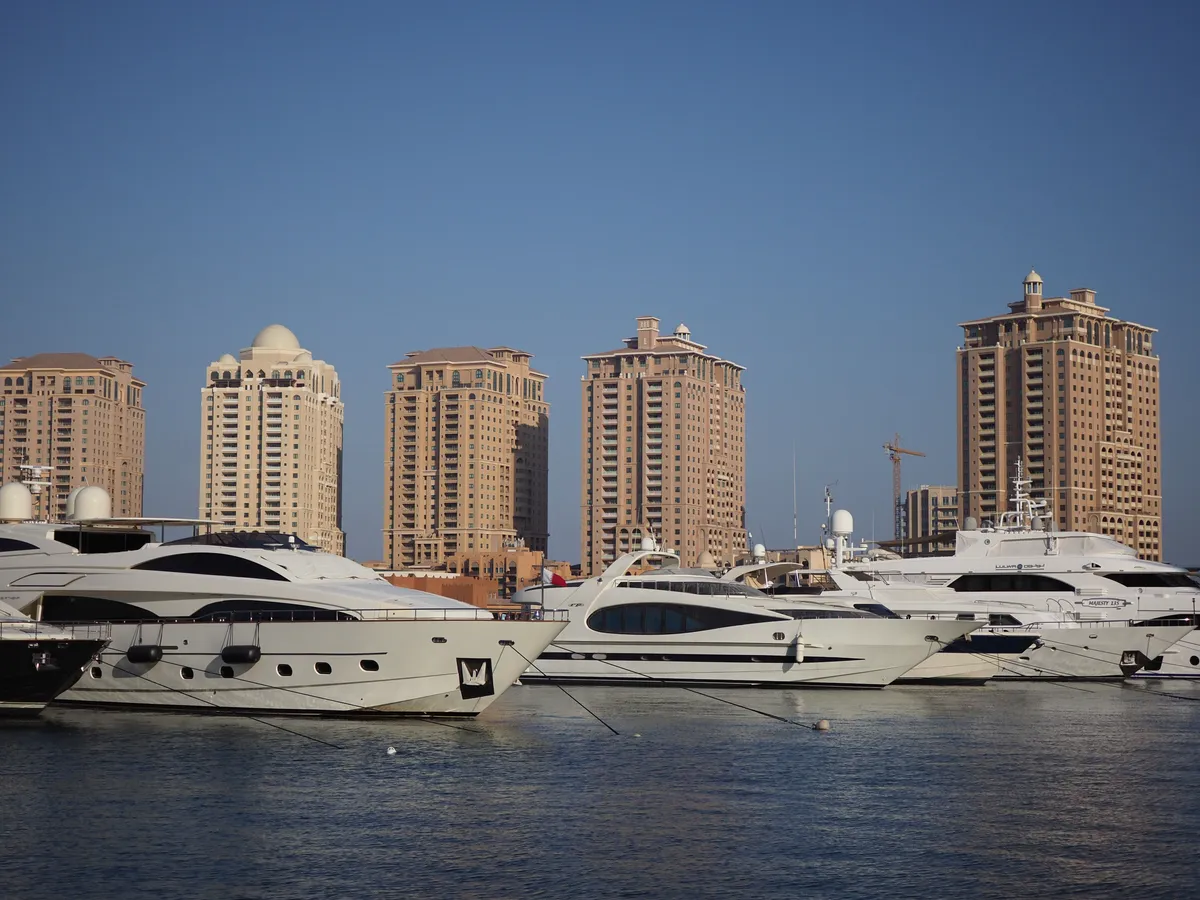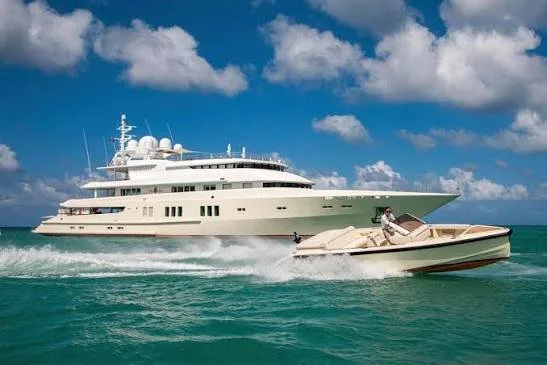
In this MFS planning model, a debt-free $10 million, 115-foot motor yacht requires approximately $14.66 million of first-year liquidity , including the purchase, closing, initial technical work, one year of operations and a six-month cash reserve. Private-only operations cost about $2.49 million a year , or $207,500 per month . Limited charter lowers modeled owner cash to $2.23 million; active charter lowers it to $1.85 million. After five years and a modeled sale, net cash exposure ranges from $15.07 million to $18.43 million , depending on charter use.
Those are planning estimates, not universal rules. A newer 100-foot yacht and an older 130-foot yacht can both sell for $10 million while carrying very different crews, systems, insurance risks, fuel consumption and refit needs.
Model status: Every dollar amount below is an original MFS planning estimate unless a current external fact is specifically cited. The model is not a broker quote, survey, insurance indication, marina contract, charter guarantee, appraisal, tax opinion or financing offer.
Key Takeaways
-
The $10 million purchase price is only the entry cost. This model requires another $3.42 million of year-one spending plus a $1.245 million liquidity reserve .
-
The private annual operating budget is $2.49 million , with crew, maintenance and refit funding representing the largest categories.
-
A four-week limited-charter program generates $500,000 of gross fees but reduces the owner’s annual cash requirement by only $260,000 in this model.
-
An eight-week active-charter program generates $1.2 million of gross fees but still leaves the owner funding about $1.85 million for the year.
-
A separate $1 million charter-revenue waterfall produces only $550,000 of net contribution before fixed yacht costs, debt service, income tax and depreciation.
-
With a 65% resale-value assumption and 8% selling costs, five-year net cash exposure is $18.43 million private-only, $17.07 million with limited charter and $15.07 million with active charter .
-
No tax deduction, depreciation benefit, debt financing or investment return is assumed. Those items can change tax reporting or timing, but they do not make invoices disappear.
What Yacht Does This $10 Million Model Assume?
The model assumes a pre-owned, 35-meter/115-foot displacement motor yacht , approximately eight to twelve years old, with seven full-time crew. It is based in South Florida, cruises seasonally in the Bahamas and Caribbean, and is acquired without debt.
| Assumption | MFS model input |
|---|---|
| Purchase price | $10,000,000 |
| Yacht profile | Pre-owned 35m/115ft motor yacht |
| Age at acquisition | 8-12 years |
| Crew | 7 full-time positions |
| Home program | South Florida, Bahamas and Caribbean |
| Private operating year | Normal owner use; no major casualty or full repaint |
| Limited charter | 4 weeks at $125,000 base fee per week |
| Active charter | 8 weeks at $150,000 base fee per week |
| Broker plus charter-management deductions | 20% of base charter fees |
| Operating-cost inflation | 4% annually after year one |
| Charter-fee growth | 3% annually after year one |
| Base resale case | 65% of purchase price after five years |
| Selling costs | 8% of gross resale proceeds |
| Financing | None |
| Tax benefits | None assumed |
Current published charter listings support the rate range as plausible market context, not as a guaranteed result. Fraser’s August 2026 listings include 35- to 40-meter yachts from roughly $85,000 to $175,000 per week, depending on vessel, age, condition and season. Source: Fraser Yachts
Crew compensation is also not a static table. The 2026 YPI CREW salary guide states that its ranges draw on live recruitment data and actual placements across private and charter yachts. The model therefore budgets the full employment system - base salaries, leave, travel, benefits, recruitment and training - rather than multiplying a single salary chart. Source: YPI CREW
How Much Cash Does a $10 Million Yacht Require in the First Year?
The modeled first-year liquidity requirement is $14.663 million. Approximately $13.418 million is spent or committed during acquisition and year-one operations; the remaining $1.245 million is a six-month reserve that should still be available unless the operation consumes it.
First-Year Cash Requirement
| Cash requirement | Modeled amount | What it covers |
|---|---|---|
| Purchase price | $10,000,000 | Debt-free acquisition price |
| Survey, haul-out, sea trial and specialists | $60,000 | Hull, machinery, systems and targeted specialist inspections |
| Maritime legal, entity, title and escrow work | $75,000 | Contract review, ownership structure, title/lien work and closing coordination |
| Florida sales/use tax assumption | $18,000 | Florida maximum if the transaction is taxable and the cap applies |
| Flag, registration and documentation setup | $25,000 | Government filings plus professional/registry/agent work |
| Crew transition and recruitment | $150,000 | Recruiting, overlap, relocation, travel, uniforms and onboarding |
| Immediate technical catch-up and commissioning | $500,000 | Survey findings, spares, safety, IT/security, soft goods and deferred work |
| Dockage, utility and vendor deposits/prepaids | $100,000 | Initial deposits and operating accounts |
| Year-one private operating budget | $2,490,000 | Full annual budget shown below |
| Six-month working-capital reserve | $1,245,000 | Liquidity held, not assumed spent |
| Total first-year liquidity plan | $14,663,000 | Purchase, launch, operations and retained reserve |
Florida’s Department of Revenue states that the maximum sales and use tax on the sale of a boat or vessel is $18,000, including discretionary surtax. That fact is specific to a qualifying Florida transaction; another state, import, VAT or duty position can change the acquisition cost dramatically. Source: Florida Department of Revenue
The $25,000 registration and documentation line should not be mistaken for a government filing fee. The U.S. Coast Guard’s September 2025 fee schedule lists a $133 initial Certificate of Documentation fee, with modest additional filing fees. Most of the modeled line is for professional, registry, title, corporate and agent work that varies by flag and transaction. Source: U.S. Coast Guard NVDC
Survey and sea-trial rights must also be embedded in the purchase contract. IYBA notes that yacht purchase agreements commonly condition the offer on personal inspection, complete survey, sea trial and inventory review. The buyer should align technical due diligence with the contract’s notice and acceptance deadlines. Source: IYBA
For a broader acquisition checklist, see MFS’s Cost of Buying a Yacht: True First-Year Costs .
What Is the Annual Operating Budget for a $10 Million Yacht?
The private-only operating budget is $2.49 million a year, or $207,500 per month on average. The actual funding pattern will not be smooth: insurance, yard invoices, annual dockage, crew flights and major spares can create large single-month cash calls.
Illustrative Private Annual Budget
| Operating category | Annual budget | Monthly average |
|---|---|---|
| Crew base compensation | $720,000 | $60,000 |
| Crew taxes, benefits, health, leave, travel, recruitment and training | $210,000 | $17,500 |
| Insurance | $150,000 | $12,500 |
| Dockage, utilities and shore services | $180,000 | $15,000 |
| Fuel and lubricants | $220,000 | $18,333 |
| Routine maintenance, repairs and spares | $330,000 | $27,500 |
| Planned yard/refit reserve | $280,000 | $23,333 |
| Yacht management, accounting, legal and compliance | $150,000 | $12,500 |
| Communications, IT, security and subscriptions | $45,000 | $3,750 |
| Provisions, housekeeping and owner supplies | $70,000 | $5,833 |
| Tenders, toys and watersports equipment | $45,000 | $3,750 |
| Operating contingency | $90,000 | $7,500 |
| Total | $2,490,000 | $207,500 |
This budget does not include loan payments, income tax, depreciation, a full exterior paint project, catastrophic damage, extraordinary owner travel, purchase-related tax outside the Florida assumption or the opportunity cost of capital.
Why Crew Costs Are More Than Salaries
The seven base salaries total $720,000 in this model. The additional $210,000 is not padding. It funds employer taxes where applicable, medical insurance, leave travel, training, uniforms, recruitment, temporary cover, bonuses and turnover. A family office that budgets only monthly net pay will understate the employment cost and may also miss payroll, immigration and labor obligations.
Why Maintenance and Refit Funding Must Be Separate
The $330,000 routine-maintenance line pays for work expected during the year. The $280,000 reserve is cash designated for less frequent projects. Combining them hides whether the yacht is maintaining current systems or merely postponing a future yard bill.
The Purchase Price Is Not the Number That Determines Whether You Can Afford the Yacht
Affordability is determined by the yacht’s recurring and stressed cash demand, not the amount shown on the sale listing. Purchase price measures what it takes to acquire the asset. It does not measure the systems, people and itinerary that must be funded after closing.
Six variables usually matter more than the price tag:
-
Physical size and complexity. Hull area, paint, teak, HVAC, stabilizers, generators, electronics, tenders and hydraulics require service whether the yacht was bought at a premium or a discount.
-
Age and refit history. A discounted older yacht can carry a larger technical backlog than a more expensive but recently refitted yacht.
-
Crew model. Headcount, rotations, qualifications, itinerary and service expectations determine the real employment system.
-
Operating profile. Fast cruising, long repositioning legs, remote destinations and heavy owner use consume more fuel, spares and technical support.
-
Commercial ambitions. Charter can add revenue, but it can also add certification, insurance, payroll, marketing, turnaround and wear costs.
-
Owner liquidity. The yacht must be funded when markets are down, a business distribution is delayed or a charter week cancels.
An owner who can wire $10 million but cannot comfortably fund $200,000-plus months, a surprise $1 million yard call and several years of value loss does not have a purchase-price problem. The owner has a carrying-capacity problem.
What Changes Under Private-Only, Limited-Charter and Active-Charter Ownership?
Charter lowers net owner cash, but it does not eliminate the permanent cost base. The crew, insurance, berth, management infrastructure and much of maintenance continue even when no charter guest is aboard.
Year-One Comparison
| Case | Charter weeks | Gross base fees | Annual operating cost | Net charter receipts after 20% | Net owner cash need | Average monthly owner burn |
|---|---|---|---|---|---|---|
| Private only | 0 | $0 | $2,490,000 | $0 | $2,490,000 | $207,500 |
| Limited charter | 4 at $125,000 | $500,000 | $2,630,000 | $400,000 | $2,230,000 | $185,833 |
| Active charter | 8 at $150,000 | $1,200,000 | $2,810,000 | $960,000 | $1,850,000 | $154,167 |
The limited-charter operating budget includes $140,000 of additional crew, turnaround, compliance, insurance and wear costs. The active-charter budget includes $320,000 of those additional costs. Charter receipts are shown after a modeled 15% broker commission and 5% charter-management charge.
These percentages are assumptions, not universal contract terms. Northrop & Johnson currently describes APA as typically 25% to 35% of the charter fee and states that its charter broker fee is 15% of the base fee. Actual central-agency, retail-broker, management and marketing economics must be read from the executed agreements. Source: Northrop & Johnson
The monthly figures are averages, not recommended funding installments. Charter cash arrives around contracted dates, while annual expenses may be concentrated before the season or during the shipyard period.
Why Is $1 Million of Charter Revenue Not $1 Million of Profit?
Because base charter fees are reduced before they can support the yacht’s permanent cost base, while APA is normally a pass-through for charter expenses rather than unrestricted owner income.
Illustrative $1 Million Charter Revenue Waterfall
| Charter cash item | Amount | Owner economics |
|---|---|---|
| Gross base charter fees | $1,000,000 | Top-line revenue before deductions |
| Illustrative APA funded by charterers | $300,000 | Tracked separately; spent on charter costs or returned |
| Less: retail/charter broker commission at 15% | ($150,000) | Deduction from base fees |
| Less: charter management and marketing at 5% | ($50,000) | Deduction from base fees |
| Less: temporary crew, overtime and turnarounds | ($60,000) | Owner-funded incremental cost |
| Less: insurance, commercial compliance and administration | ($50,000) | Owner-funded incremental cost |
| Less: maintenance and charter-wear reserve | ($95,000) | Cash reserved for added usage and condition |
| Less: unreimbursed repositioning and miscellaneous costs | ($45,000) | Costs not recovered through APA in this model |
| Net charter contribution | $550,000 | Available to offset permanent yacht costs |
| Less: private-case fixed and semi-fixed operating base | ($2,490,000) | Crew, berth, insurance, maintenance and other ownership costs |
| Owner cash still required | $1,940,000 | Before debt service, income tax and depreciation |
The $300,000 APA line does not increase the $1 million revenue figure. It is shown to explain cash handled during charter. Under common charter practice, the captain uses APA for items such as guest provisions, fuel and charter-period port costs, then reconciles the balance.
The better measurement is:
Base charter fees - commissions - charter-specific owner costs = net charter contribution
That contribution is then compared with the yacht’s full annual cost. For a deeper version of this analysis, read A Yacht Can Generate $1 Million in Charter Revenue and Still Lose Money and How Much Do Yacht Charters Make? .
Can Chartering the Yacht Ever Cover the Full Operating Budget?
It can in a sufficiently strong and legally executable program, but the required weeks may be commercially unrealistic or incompatible with owner use.
At the active-case $150,000 weekly rate, the model retains $120,000 after the 20% broker/management deduction. After approximately $40,000 of incremental owner costs per charter week, the net contribution is about $80,000. Covering the $2.49 million private cost base would therefore require roughly 31 charter weeks :
$2,490,000 / $80,000 = 31.1 weeks
That is a mathematical break-even point, not a forecast. It ignores cancellations, seasonality, owner blackouts, yard time, repositioning, taxes, debt service and depreciation. It also assumes the yacht can legally execute the planned charters.
Commercial eligibility should be confirmed before underwriting revenue. In U.S. waters, coastwise restrictions, flag/build status, passenger-for-hire rules and inspection requirements can affect the program. The Coast Guard has recently reiterated that an uninspected passenger vessel is limited to six or fewer passengers for hire, while more than six requires inspection and a Certificate of Inspection. Source: U.S. Coast Guard
For applicable Red Ensign yachts, the REG Yacht Code is another example of how commercial operation can trigger a different compliance framework for yachts 24 meters and over. Flag, build year, passenger count and operating area must be reviewed vessel by vessel. Source: UK Maritime and Coastguard Agency
What Does Five Years of Ownership Cost After Resale?
Under the base resale assumption, five-year net cash exposure is $18.435 million private-only, $17.069 million with limited charter and $15.071 million with active charter. Working capital is excluded from economic cost because the model assumes the reserve remains available and is released at sale.
Annual Net Owner Cash by Case
| Ownership year | Private only | Limited charter | Active charter |
|---|---|---|---|
| Year 1 | $2,490,000 | $2,230,000 | $1,850,000 |
| Year 2 | $2,589,600 | $2,323,200 | $1,933,600 |
| Year 3 | $2,693,184 | $2,420,248 | $2,020,832 |
| Year 4 | $2,800,911 | $2,521,302 | $2,111,850 |
| Year 5 | $2,912,948 | $2,626,524 | $2,206,814 |
| Five-year operating cash | $13,486,643 | $12,121,274 | $10,123,096 |
Costs grow at 4% annually; charter fees grow at 3%. That one-point spread causes the owner’s net burden to increase each year even though charter revenue rises.
Five-Year Cash Exposure - Base Resale Case
| Five-year component | Private only | Limited charter | Active charter |
|---|---|---|---|
| Acquisition and launch cash before operations | $10,928,000 | $10,928,000 | $10,928,000 |
| Five-year operating cash after charter | $13,486,643 | $12,121,274 | $10,123,096 |
| Gross resale at 65% of purchase price | $6,500,000 | $6,500,000 | $6,500,000 |
| Less modeled selling costs at 8% | ($520,000) | ($520,000) | ($520,000) |
| Net sale proceeds | ($5,980,000) | ($5,980,000) | ($5,980,000) |
| Five-year net cash exposure | $18,434,643 | $17,069,274 | $15,071,096 |
| Average economic cost per month owned | $307,244 | $284,488 | $251,185 |
The monthly economic cost is higher than the annual operating burn because it includes acquisition costs and value loss after resale. It still excludes financing interest, income tax and the return the $10 million could have earned elsewhere.
How Sensitive Is the Five-Year Cost to Resale Value?
A 15-point change in residual value moves net sale proceeds by $1.38 million after modeled selling costs. Resale should be a scenario, not a promise.
| Resale case | Gross resale | Net proceeds after 8% selling cost | Private five-year exposure | Limited-charter exposure | Active-charter exposure |
|---|---|---|---|---|---|
| Weak: 50% residual | $5,000,000 | $4,600,000 | $19,814,643 | $18,449,274 | $16,451,096 |
| Base: 65% residual | $6,500,000 | $5,980,000 | $18,434,643 | $17,069,274 | $15,071,096 |
| Strong: 75% residual | $7,500,000 | $6,900,000 | $17,514,643 | $16,149,274 | $14,151,096 |
These are planning sensitivities, not a forecast of the yacht market. Builder reputation, age, maintenance records, engine hours, survey condition, refit quality, regulatory status, styling, inventory and forced-sale timing can all affect realized proceeds.
What Happens in a Major Refit Year?
A reserve reduces the funding shock, but it does not make the refit free. If the yacht enters a $1.5 million yard project in year three, the modeled refit reserve would have received approximately $874,000 across years one through three, assuming 4% annual growth and no earlier use.
| Major-refit test | Amount |
|---|---|
| Year 1 reserve contribution | $280,000 |
| Year 2 reserve contribution | $291,200 |
| Year 3 reserve contribution | $302,848 |
| Reserve available if untouched | $874,048 |
| Illustrative major refit | $1,500,000 |
| Additional owner funding needed | $625,952 |
If the reserve was used for earlier projects, the owner could face the full $1.5 million call. The cash forecast must also account for yard deposits, progress payments, change orders, tax, crew accommodation and delayed redelivery. A reserve on the P&L without a segregated or clearly monitored cash balance is not a funded reserve.
Would Financing Make the Yacht More Affordable?
Financing reduces the cash needed to buy the yacht but adds a fixed annual claim on liquidity. It changes timing; it does not reduce the underlying operating cost.
For illustration only, a $6 million loan at 8% fixed over 15 years would require about $57,339 per month , or $688,070 per year . The private-case annual cash burden would rise from $2.49 million to about $3.178 million before lender reserves, fees or balloon terms.
That is not a current loan quote. A real credit model must test rate, amortization, down payment, covenants, insurance requirements, lender valuation, currency, entity guarantees and the effect of a weak resale.
How Should an Owner or Family Office Test Affordability?
The yacht should pass a zero-charter, high-cost, weak-resale stress test without forcing asset sales or disrupting the owner’s core financial plan. Net worth by itself is not enough; liquidity and recurring after-tax cash flow matter more.
MFS would treat the following as planning illustrations, not universal thresholds:
-
Six-month operating reserve: $1.245 million in the base model; twelve months may be more appropriate when income is volatile.
-
Operating stress: $3.113 million a year, equal to a 25% overrun on the $2.49 million private budget.
-
Refit-year stress: $4.613 million when the 25% operating stress and a separate $1.5 million project occur together.
-
Coverage ratio: available recurring after-tax discretionary cash divided by stressed yacht cash. A 1.5x internal target would imply about $4.67 million of annual discretionary cash for the normal stress case, or $6.92 million in the refit-year case.
-
No-charter survivability: the owner can carry the yacht for at least 24 months with zero bookings.
-
Weak-exit tolerance: a 50% resale residual does not impair other family-office obligations or require a rushed sale.
The coverage targets above are conservative planning devices. They are not assertions that every owner needs a particular income or net worth. A family with $150 million of illiquid business equity can be less prepared than a family with lower net worth but predictable distributions and substantial liquid reserves.
Can Tax Treatment Solve the Affordability Problem?
No. Tax treatment may change after-tax economics and timing, but it cannot replace cash-flow capacity. This model assumes no deduction or depreciation benefit.
A genuine charter business, mixed owner use and client entertainment can produce very different federal and state outcomes. Section 274 restricts deductions for entertainment activities and facilities, while other rules may apply to property used in a bona fide business, business-use substantiation, passive activity, at-risk limits, related-party use, hobby-loss analysis and depreciation recapture. Source: 26 U.S.C. Section 274
The structure must follow the actual operating facts. An LLC, foreign flag or charter listing does not by itself create a deductible business. For a separate tax analysis, read Can You Write Off a Yacht in 2026? .
What Should Be Completed Before the Purchase Agreement Goes Hard?
The buyer should have a technical, legal, tax and operating model before the acceptance deadline - not after closing. At minimum, the acquisition team should resolve:
-
Scope of full condition, machinery, haul-out and specialist surveys.
-
Sea-trial protocol, acceptance deadline and defect-negotiation strategy.
-
Title, lien, mortgage, ownership, beneficial-owner and sanctions checks.
-
Flag, build, coastwise, passenger and intended charter eligibility.
-
Sales/use tax, VAT, import duty, delivery location and cruising plan.
-
Insurance indications, deductibles, named-storm terms and navigation limits.
-
Berth availability, seasonal dockage and hurricane plan.
-
Crew continuity, contracts, payroll, leave, visas and transition costs.
-
Maintenance history, class/flag status, warranties and five-year yard forecast.
-
Private, charter and no-charter cash forecasts with a funded refit reserve.
What Is the Bottom Line?
A $10 million yacht is not a $10 million financial decision. In this model it is a $14.66 million first-year liquidity decision, a $2.49 million recurring private operating decision and a $15.07 million to $18.43 million five-year net-cash decision after resale.
Limited charter recovers part of the cost. Active charter recovers more. Neither case turns the yacht into passive income, and $1 million of charter revenue does not become $1 million of owner profit.
The right pre-purchase question is not, “Can I pay $10 million?” It is:
Can I fund the yacht’s stressed cash demand, protect the rest of my balance sheet and still enjoy the vessel if charter revenue is zero and resale is weak?
MFS Yacht Owner Review
McGregor Financial Services builds owner-side acquisition budgets, annual operating plans, charter-revenue waterfalls, funding forecasts, refit reserves, tax-ready accounting and independent monthly reporting for yacht owners and family offices.
If you are evaluating a purchase, request a confidential yacht ownership cost review before the purchase agreement becomes nonrefundable. Start with MFS Yacht Owner Advisory or explore Financial Administration for Yachts .
Source Notes and Methodology
The numerical model is original to McGregor Financial Services. External sources were used only to verify current legal, regulatory and market-context statements:
-
Florida Department of Revenue - Sales and Use Tax on Boats , revised July 2024 and current on the Department’s forms page as of August 18, 2026.
-
U.S. Coast Guard National Vessel Documentation Center - Table of Fees , revised September 2025.
-
International Yacht Brokers Association - Escrow Agents and Deposits , on survey, sea-trial and inspection contingencies.
-
YPI CREW - Yacht Crew Salary Guide 2026 , based on live recruitment data and placements.
-
Fraser Yachts - Winter Charter Listings , used only as current asking-rate context.
-
Northrop & Johnson - Mediterranean Yacht Charter , on APA and stated broker commission.
-
U.S. Coast Guard - Illegal Charter Enforcement Release , on passenger-for-hire and inspection requirements.
-
UK Maritime and Coastguard Agency - REG Yacht Code, Part A , on applicable commercial yachts 24 meters and over.
-
Office of the Law Revision Counsel - 26 U.S.C. Section 274 , entertainment-related deduction limitations.
Editorial and legal note: Published charter rates are asking rates, not proof of achieved bookings. The financial model is for planning education and must be rebuilt around the actual yacht, survey, ownership structure, flag, itinerary, contracts, insurance, financing and tax facts. McGregor Financial Services provides tax and financial services; maritime legal, flag, class, insurance, survey and brokerage matters should be addressed by appropriately qualified professionals.